How to Prepare a Piano for Moving
Record whether the item is an upright, grand or other piano, its approximate dimensions and manufacturer details if available. Photograph finish, legs, pedals and any existing damage. Do not assume a small-looking piano is light or suitable for ordinary furniture handling.
Request a Moving QuoteHow to Prepare a Piano for Moving: Practical Decisions and Checklist
Identify the piano and its current condition
Measure the full carrying path
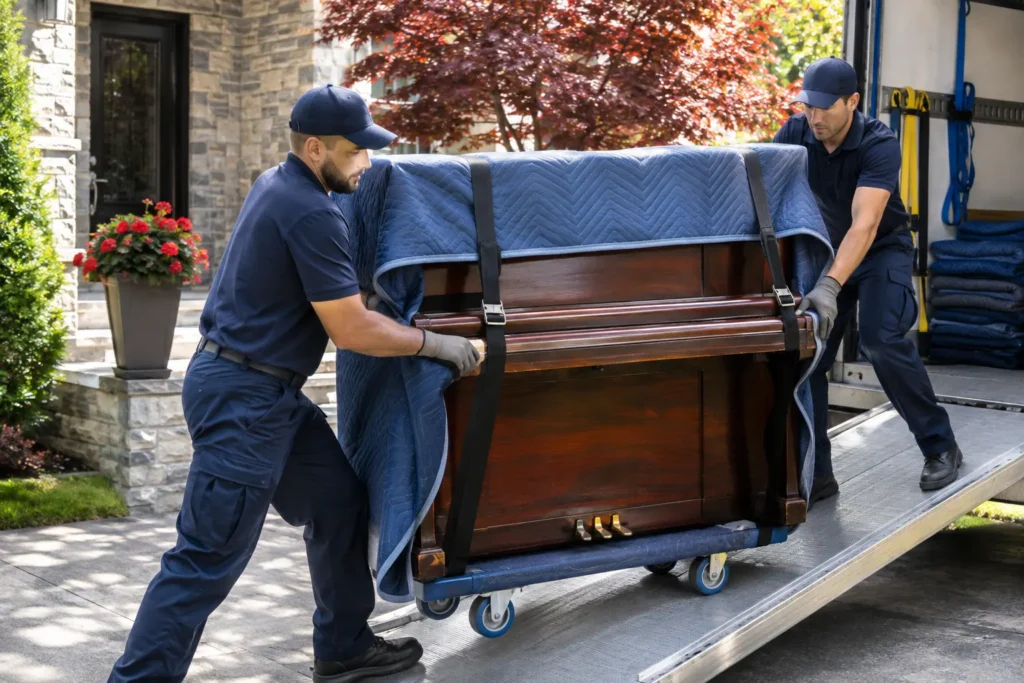
Check every doorway, landing, stair turn, elevator and truck loading point at both properties. Describe thresholds and outdoor steps that might change the equipment required. A piano may need disassembly or specialty handling that a standard moving crew cannot provide.
Clarify what the specialist includes
Ask whether a suitably equipped piano-moving team is available and who handles parts removal, padding, protection and reassembly. Tuning, instrument servicing or restoration should be agreed separately with qualified providers. Obtain written terms describing the actual work and handling coverage.
Action Checklist: How to Prepare a Piano for Moving
- Photograph the instrument and note its type
- Measure stair and doorway clearances
- Confirm specialist piano equipment
- Arrange tuning or instrument servicing separately
Contact Our Moving Team
Have a question about your move? Reach our team directly or provide your inventory and property details to request a quotation.
Prepare the information a piano assessment needs
Identify the instrument without assuming a handling method
Provide the piano type, available make and model information, and clear photographs showing the instrument and surrounding space. Mention known damage, repairs or unusual features without testing internal parts. An acoustic upright, grand and digital instrument should not be treated as interchangeable loads. Ask a suitable provider what information is needed to assess the actual work. This guide concerns preparation of the request and property; it does not supply instructions for tipping, dismantling or lifting an instrument.
Describe every part of the route
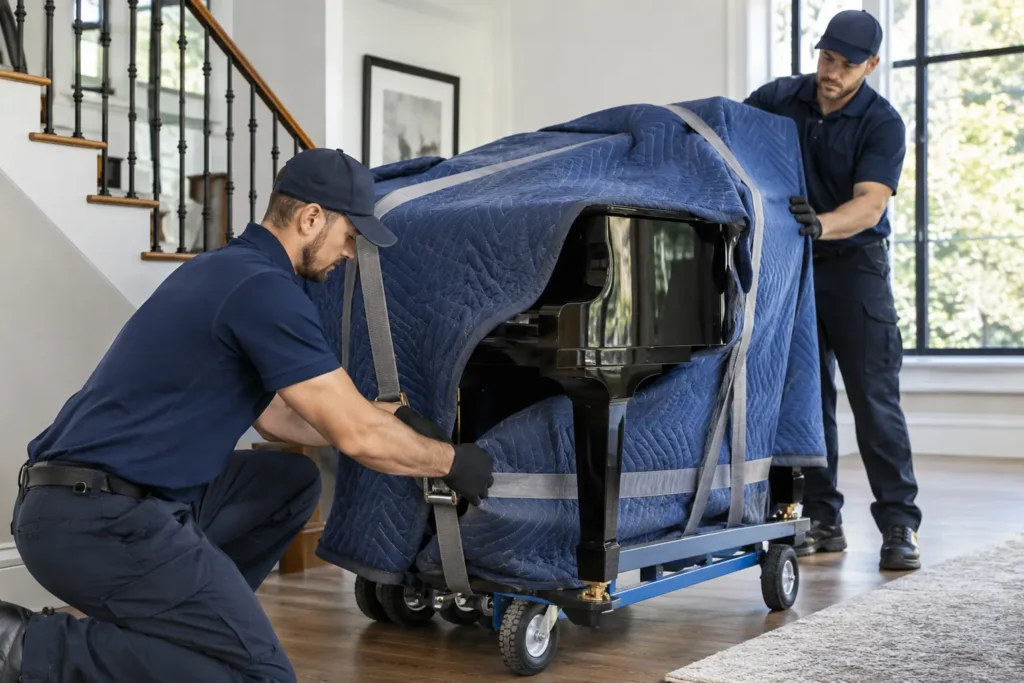
Record collection and receiving floors, steps, thresholds, tight turns and the intended final position. Include doors and lift information where relevant and mark anything not measured or confirmed. An internal move can still require specialist assessment when levels or awkward clearances are involved. Explain changes since any earlier move, including flooring or built-in furniture. Do not use a previous successful journey as evidence that the present route is suitable. Let the assessor establish the method, appropriate personnel and equipment for the accepted task.
Separate transport from technical follow-up
Ask which preparation, transport and placement tasks the provider accepts and which require another specialist. Tuning, technical inspection, installation or environmental advice should not be inferred from collection and delivery. Keep the instrument’s condition record and applicable protection documents with the proposal. Identify the person authorized to receive it and approve placement. If suitability remains uncertain, resolve that before collection instead of assuming a fragile or heavy item can be added to a household appointment at short notice.
Working checklist
- Identify type and available model information.
- Photograph the instrument and surrounding route.
- Record level changes and narrow points.
- State the final receiving position.
- Clarify specialist and technical tasks separately.
- Retain condition and protection records.
Questions about this guide
Can I prepare a piano by taking parts off myself?
Do not use a general moving checklist as a dismantling method. Identify the instrument and consult relevant maker information and a suitable specialist about preparation. Ask which tasks the provider accepts. Unfamiliar or fragile parts should not be disturbed merely to make the enquiry more detailed or to fit an assumed household handling method.
Does moving a piano across one room need assessment?
Describe the complete internal route, including thresholds, level changes, floor conditions and final placement. A short distance does not establish that ordinary furniture handling is suitable. Provide instrument details and ask a suitably equipped provider to assess the actual work. Avoid trial lifting to test the route.
Should tuning be included in my transport request?
State any technical follow-up you want and ask who can appropriately provide it. Keep tuning and inspection distinct from accepted physical collection, transport and placement. Do not assume a piano-moving appointment includes a technician or establishes an exact adjustment schedule; consult the relevant specialist for the instrument and circumstances.
What should the receiver know before the piano arrives?
Give them the agreed final position, access instructions, instrument reference and provider contact. Explain their authority to approve placement and how an exception is recorded under the actual agreement. Keep technical setup or follow-up assigned separately. The receiver should not be expected to choose an unassessed alternative route or undertake specialist handling.