Office Moving in Canada — Plan Your Moving Quote
Coordinate workstations, equipment, access windows, packing and business continuity requirements before your relocation.
Request a Moving Quote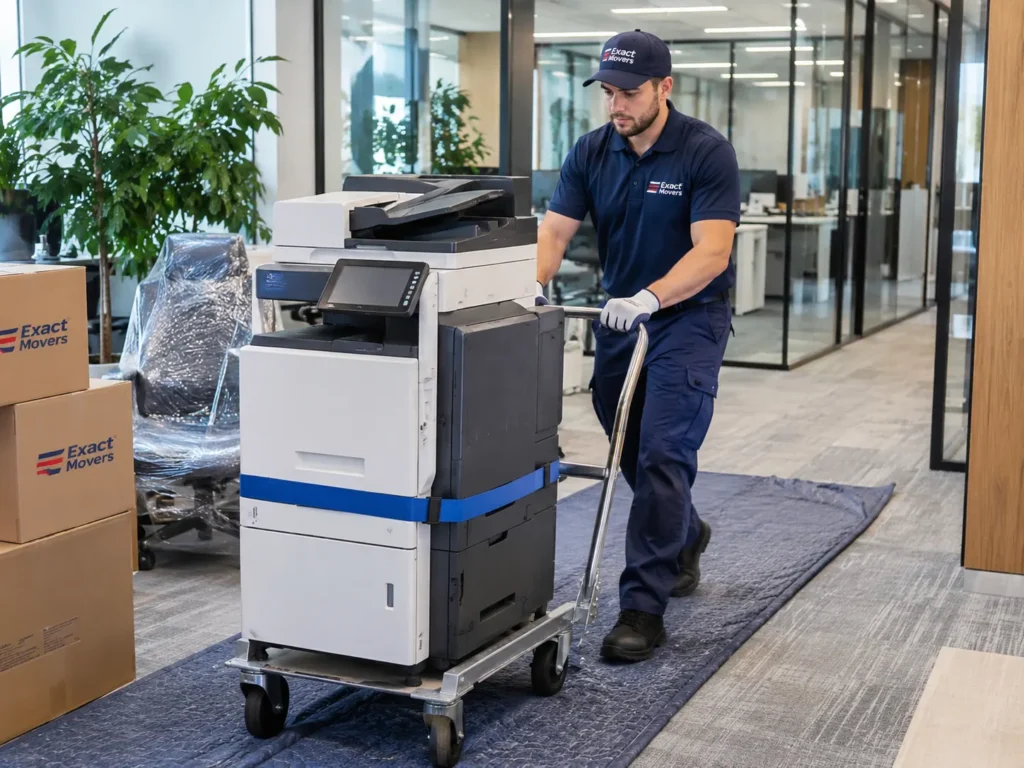

Illustrative moving images
Plan an office relocation around the work your business must keep doing
Exact Movers offers office moving services across Canada. A useful relocation brief connects the physical inventory with the way the business operates: which teams can stop work, which equipment must remain available and when the receiving space can accept delivery. Start with those constraints before selecting a collection date. A truck appointment cannot resolve an unfinished floor plan or decide who reconnects the network.
This page covers the physical relocation request and the responsibilities you should define around it. Identify furniture, cartons, equipment, access, packing and placement, then ask for the accepted scope in writing. IT work, electrical work, data handling and specialist equipment preparation require their own allocation. They should not disappear into a general instruction to move the office.
Give each work group an inventory owner
Assign a contact to each department, floor or work area. That person should identify the assets moving, items remaining and contents that need separate decisions. Record desks, chairs, meeting tables, storage furniture, packed files, small appliances and equipment. Include store rooms and shared areas rather than counting only the visible workstations.
Use an asset or item-group code connected to the destination layout. A label such as “Finance workstation F04, destination room 2B” provides a placement instruction without exposing confidential contents. Where an item is leased, fixed, unusually heavy or awaiting disposal, mark that status. The physical-moving inventory should not be mistaken for authorization to discard assets or disconnect equipment belonging to another organization.
Separate physical moving from business continuity
List the functions that must remain available during the transition. A reception desk, shared printer, payment terminal or small team's internet connection can be more important to the sequence than the largest furniture. Identify when each group may release its belongings and what must be usable before staff arrive at the new premises.
Ask the moving team to assess the physical stages, while the business assigns technical and operational duties. Name who backs up data, prepares equipment, disconnects services, reconnects systems and tests them. Transporting a workstation does not itself establish that a computer can be switched on, connected and used for work at the destination.
Build a responsibility matrix
For each task, record the person or organization responsible, the required input and the completion check. Useful rows include final inventory approval, employee packing instructions, furniture preparation, IT shutdown, building bookings, loading access, custody of confidential records, receiving-room signs and equipment recommissioning. Mark a provider's duty accepted only when the written scope identifies it.
This matrix is particularly useful where facilities, IT, department heads and an external landlord all participate. One named coordinator should resolve conflicting instructions and approve changes. Give the provider the coordinator's contact and identify any limits on that person's authority. A department employee changing a destination room should not unintentionally authorize an additional collection or a revised commercial arrangement.
Survey both commercial properties
Describe the floor, entrance, carrying route, stairs, freight lift, loading dock and lawful vehicle position at each property. Ask management about working hours, reservations, vehicle clearance, security procedures and protection of common areas. Share actual written instructions where available. Do not assume that a loading-bay reservation permits the vehicle to wait on a public street.
Measure awkward furniture against the complete route rather than just the office door. Include lift openings, corridor turns, shared entrances and receiving rooms. If the new space is under construction, explain which access information is confirmed and which remains provisional. The provider needs a usable receiving route, not only the future building's postal address.
Match packing to the office contents
Decide which employees pack their own work areas, which groups require assistance and who supplies the relevant materials. Give staff a clear instruction for shared stationery, files and personal belongings. A vague instruction to clear desks may leave cupboards full or create unlabeled cartons that nobody can reconcile later.
For equipment, artwork, glass or unusually delicate furniture, provide the information needed for individual assessment. Identify original packaging where it exists and any manufacturer or lease-provider preparation requirement. Secure confidential records through the business's approved process; do not disclose sensitive contents in a public enquiry or on an external carton label.
Use a receiving layout that works without guesswork
Prepare a floor plan with consistent room and workstation codes. Put the same codes on the inventory and relevant cartons. Identify circulation areas that must remain clear and any room not yet ready to receive items. The plan should tell the receiving representative where goods belong without requiring them to reconstruct a department's intentions from memory.
Discuss placement and furniture work explicitly. Moving desks into the correct room, reassembling named pieces, arranging them to a plan and installing wall-mounted items are different tasks. Ask which duties are accepted. Do not assume that the presence of tools or a service name includes alterations, fixed installation or work requiring another qualified trade.
Choose a single-stage or staged sequence deliberately
A single-stage move may suit an office that can release its contents together and receive them into a ready space. A staged request may suit a business keeping part of its operation active. Describe the actual reason for the stages, the item groups involved and the access window for each visit. The provider must assess the resources and proposal rather than infer a sequence from department names.
For every stage, identify what becomes unavailable and what must be checked before the next stage begins. If a shared printer moves with the first group, the second group may need another arrangement. If the receiving lift is booked only for one period, a staged inventory does not automatically create multiple delivery appointments. Reconcile the operational sequence with the physical access plan.
A worked office-planning example
Consider an illustrative small office moving its customer-facing team and back-office staff at different times. The business keeps reception equipment and one shared workstation in use while archive cartons and spare furniture are released. Facilities confirms the origin and receiving access; IT prepares devices; a designated receiver checks room codes as each group arrives. This is an example of a planning method, not a completed Exact Movers project or a guaranteed operating sequence.
The request to the moving company should identify the two groups, their inventories, release windows and placement instructions. It should ask whether the proposed physical stages can be accepted and how separate visits affect the quote. The business remains responsible for deciding which systems must work between stages unless another duty is expressly accepted by the relevant provider.
Compare quotations using the same operational brief
Provide the same dated inventory, access instructions, layout and requested stages to each provider being compared. Ask the written response to distinguish packing, carrying, transport, placement, furniture work, materials and any separate visit. Identify assumptions about preparation or access. Comparing totals without those duties can make a smaller scope appear equivalent to a more complete one.
Review pricing basis, accepted schedule, exclusions and change procedure. Ask how waiting, additional stops, extra inventory or a delayed receiving space would be handled where applicable. No fixed fee, out-of-hours promise or crew configuration is stated here. The proposal should define the actual work and its terms for your business rather than rely on a standard office-size description.
Control confidential and high-value assets
Allocate custody of sensitive records, keys, access cards and valuable portable equipment before the move. Decide which belongings the business will retain directly and which can enter the accepted shipment. Use controlled identifiers and an authorized handover process. Do not place customer data, employee records or security credentials into ordinary photographs or labels shared without a need.
For server racks, technical machinery or other specialist items, identify dimensions, weight where known, anchoring and preparation responsibilities. Ask for a handling assessment before assuming normal furniture transport is suitable. A corporate service description does not replace item-specific acceptance or establish that electrical isolation, calibration or technical installation is included.
Prepare for changes without losing the current plan
Use one version of the inventory and a simple change log. Record what changed, who approved it and whether it affects timing, access, duties or price. When an access card is delayed or a department adds a storage room, notify the provider before relying on the previous arrangement. A revised floor plan should clearly replace the earlier one.
At delivery, the authorized receiver should reconcile asset groups, placement and outstanding accepted tasks. Note visible concerns and retain the relevant records for the actual reporting procedure. The business then completes its own IT, facilities and operational checks. Physical delivery and an office being ready for staff are related milestones, but they are not the same completion test.
Send an office move brief that can be assessed
Three example inventory entries
Use an entry such as “Desk D04: one desk at workstation 4, destination room B2, dimensions supplied, dismantling requested but not yet accepted.” This separates the item, location and requested furniture duty. The employee should not remove components simply because the request mentions dismantling; the preparation responsibility still needs to be agreed.
For shared equipment, an illustrative entry might read “Printer P01: released by IT after shutdown, collection from shared work area, delivery to print room, reconnection by the business's contractor.” The moving request then concerns an identifiable physical item with a readiness condition. It does not silently assign network setup or manufacturer-specific servicing to the transport team.
For file cartons, record “Archive group A: numbered cartons, released by the authorized department contact, destination archive room, contents managed under the business's records procedure.” Keep the sensitive detail in the controlled register rather than on the outside. The example shows how to make a handover checkable without advertising confidential information or assuming a custody arrangement that has not been accepted.
A readiness check that names the missing input
Replace a single office-ready tick with separate entries for inventory approved, equipment prepared, loading access confirmed, receiving layout issued and authorized contacts available. Beside an incomplete entry, identify the person responsible and the next information required. For example, “destination lift requested; facilities to confirm the window” is more useful than “move booked” when the receiving condition remains uncertain.
Give the provider the readiness information relevant to the accepted physical scope. If a dependency fails, explain which asset group or appointment is affected and request a revised plan. These examples are blank planning models for your business, not records of an Exact Movers project or guarantees about the tasks that a particular quotation includes.
Include both addresses, the current inventory, requested stages, department contacts, building instructions, destination codes and any unusual items. State which preparation and technical duties the business will arrange and which physical tasks it wants quoted. Ask for the accepted scope, relevant documents and schedule in writing.
For an Ottawa office, use the dedicated Ottawa office guide for local access sources and property coordination. For other cities, provide the same level of detail and consult the relevant location guide. Exact Movers can assess a Canada-wide office-moving request against the actual premises and work; the written proposal should confirm the arrangement for your date and inventory.
Office responsibility worksheet
Use this blank planning model with your actual information. It is not an accepted quotation or a record of a completed job.
| Task or asset group | Preparation owner | Release condition | Receiving check |
|---|---|---|---|
| Inventory approval | Name the coordinator | Current version agreed | Same list at delivery |
| IT preparation | Name authorized support | Equipment released for handling | Separate technical testing |
| Furniture group | Name the assessment contact | Accepted dismantling duties | Named room and reassembly check |
| Building access | Name each property contact | Confirmed loading/lift instructions | Keys, rooms and receiver ready |
Questions about Office Movers
Can an office move take place outside normal working hours?
An evening or weekend arrangement can be requested, but the provider and each building must confirm the actual window. Give the dock, lift and security contacts, the asset groups involved and the authorized receiver. Ask whether the timing affects charges or preparation. A business preference for after-hours work is not itself an accepted appointment, and a building being open does not establish that its loading area is available.
Who should prepare the workstation inventory?
Assign an internal contact for each department and record desks, chairs, equipment and destination room codes. Distinguish assets to move from those staying or being retired. Agree who can release each group and who will reconcile it at the receiving office; handle sensitive records separately.
Does office moving include IT installation?
Do not assume network shutdown, electrical work or recommissioning is included in physical transport. Assign those tasks to your internal IT team or qualified contractor and identify when equipment will be ready to move. Ask the provider to confirm the packing and transport work it accepts.
How should confidential files be moved?
Allocate authority to pack, release and receive the records through your business's approved process. Use controlled identifiers and decide which information remains under staff custody. Discuss accepted physical handling without disclosing confidential contents in a general enquiry. Keep the agreed containers, contacts and custody responsibilities with the inventory. A broad moving description should not substitute for the particular information-handling arrangement your business requires.
Can a meeting room table be transported assembled?
Provide the table dimensions, approximate weight, construction and access measurements at both buildings. Ask whether the provider can carry it assembled or requires an accepted dismantling and protection plan. Confirm who handles fittings and reassembly, and coordinate the loading and receiving windows.
What if employees must keep working during the move?
Identify the teams and systems that must remain available, then separate assets into groups with release windows and receiving locations. Ask the provider to assess the physical stages and access while your business coordinates IT and operational continuity. Record dependencies such as a shared printer needed by staff staying behind. Do not assume that moving departments in stages automatically includes extra appointments or technical recommissioning.
Should chairs and desks have labels?
Consistent asset IDs and destination-room labels help the receiving team place and reconcile furniture. Match the labels to a controlled inventory and floor plan, and identify who can resolve a missing label. Avoid putting confidential employee or client information on items visible during transport.
Will movers disconnect printers and copiers?
Identify the equipment, dimensions and preparation instructions, and ask what physical handling the provider accepts. Assign network, electrical or manufacturer-specific shutdown and reconnection to suitably qualified personnel where needed. Include the ready-for-collection time and destination placement in the agreed schedule.
Who arranges the commercial building lift?
Assign a contact to obtain the actual reservation instructions at each property. Record confirmed times, vehicle clearance, protection and security requirements and share them with the provider. The receiving building needs its own arrangement. A lift booking does not establish that a truck can use the dock or nearby street, so include the complete loading and carrying route rather than presenting the lift alone as confirmed access.
Is protective floor covering always included?
No. Obtain the building's actual requirements for corridors, lifts and floors, then ask what materials and installation the provider accepts. Assign responsibility for removal and any separately priced work. A building requirement should not be assumed to be included in a general transport quote.
Can a company split the relocation across two dates?
You can request stages for different departments or premises. Provide a separate inventory, access window and receiving contact for each visit, and explain which equipment must remain operational. Ask the provider to confirm resources, timing and any additional visit charges in the written plan.
What if our new office access cards are delayed?
Notify the building contact and provider as soon as receiving access changes. Identify the affected asset groups, intended rooms and earliest usable window, then ask what revised delivery or other arrangement can be accepted. Obtain any changed duties, timing or charges in writing. Give the receiver the current plan and mark the earlier one superseded; a proposed appointment should not remain in circulation after it has become unworkable.
Does the quote include packing office files?
Only rely on file packing if the accepted scope identifies the work. Assign responsibility for confidential records, secure containers, labels and custody, and specify which staff may release them. Ask the provider what packing and transport it accepts without disclosing unnecessary confidential contents.
Can employees ride in the moving truck?
Do not assume passenger transport is included. Ask the provider whether a lawful option is available for the actual vehicle, and arrange staff travel separately if it is not confirmed. Ensure an authorized receiver can reach the destination during the accepted delivery window.
How are server racks treated?
Provide the rack dimensions, weight where known, anchoring, condition and carrying route, and name the responsible IT and facilities contacts. Ask for an item-specific handling assessment. Preparation, electrical isolation, disconnection and recommissioning need separate allocation to appropriate personnel. The moving proposal should identify its accepted physical duties without being treated as automatic permission for technical work or proof that every rack can travel in its existing form.
Who should approve an additional pickup?
Nominate an authorized company representative before the move and provide that person's contact to the provider. Document the additional address, assets, access and delivery destination, then obtain agreement on any change to timing and cost before the work is performed.
Can a move include the office storage room?
Include the storage room explicitly, with archive cartons, shelving, furniture and equipment distinguished from workstations. Mark goods remaining behind or assigned to another destination, and describe access and any confidentiality requirements. Identify preparation responsibilities and ask which packing, carrying and placement duties are accepted. An office inventory based only on employee desks can otherwise omit a substantial part of the intended load.
Does an office moving page confirm a specialist crew?
Exact Movers offers office moving, but the particular personnel, equipment and specialist duties must be assessed against your assets and properties. Provide measurements, access and the proposed sequence, and ask for relevant acceptance and supporting information. Allocate IT, electrical and other qualified work separately where needed. A service page does not establish that every specialist task or any specific crew configuration is included in a quotation.
What information helps compare office-move quotes?
Give each provider the same asset inventory, destination layout, packing requirements, building access windows and proposed stages. Compare the accepted crew, vehicle, included handling, exclusions, price basis and change process. Allocate IT and specialist work separately unless explicitly included.
What closes the office relocation handover?
Have the authorized receiver reconcile delivered asset groups, room placement and outstanding accepted duties against the current inventory. Record visible concerns and keep relevant photographs, approved changes and the provider contact together for follow-up under the agreement. The business then completes its separate technical and operational checks. A physical handover record should not be mistaken for confirmation that every system is ready for staff.
Which tasks should be clarified before leaving the old office?
Ask the property contact which physical conditions or agreed duties must be completed before access is handed back, and allocate them to the relevant party. Distinguish moving belongings from removal, cleaning, fixed installation or repairs that may require another arrangement. Include accepted furniture and packaging tasks in the move scope. Do not assume that clearing the main workstations resolves storage contents or every obligation associated with leaving the premises.
Contact Our Moving Team
Have a question about your move? Reach our team directly or provide your inventory and property details to request a quotation.