MOVING SERVICES & QUOTES
Business Relocation — Request a Quote
For a business relocation, separate removable furniture, stock, technical equipment and fixed fixtures before requesting a quote. Identify the departments that must remain operational, authorized asset custodians and loading permissions so the moving scope is clear alongside specialist work excluded from transport.
Get Your Moving QuoteBusiness Relocation: Scope, Access and Written Estimates
Define the business assets and premises involved
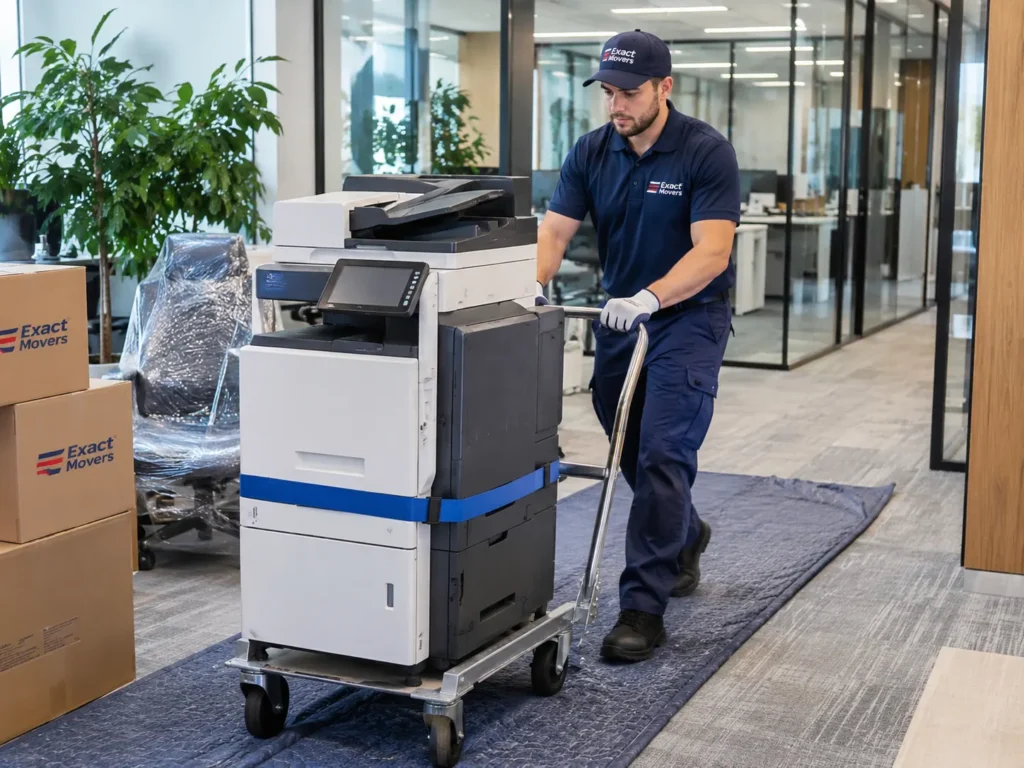
A small agency office, specialist workshop and retail premises have different relocation risks. Separate loose furniture, archives, inventory, equipment, fixed fixtures and any material requiring qualified isolation or installation. Give the originating and receiving site addresses, access windows, floor levels and desired operating schedule. A business relocation listing does not establish that every industrial or technical asset is suitable for an ordinary moving crew. The provider should confirm actual capability and exclusions for the proposed goods.
Sequence relocation against essential operations
A business may need customer service, order dispatch or critical workstations available until specific times. Build a practical sequence showing which departments and goods can be packed and when receiving rooms must open. A provider should assess whether a staged or after-hours move can be accepted rather than guarantee zero downtime. IT shutdown, utility work, secure disposal and specialist commissioning should have named responsible contractors distinct from furniture transport. Planning those dependencies helps avoid a partially moved business with no functional site.
Coordinate commercial loading and security
Commercial premises may use managed docks, limited service lifts, rear access roads and controlled entry passes. Provide the moving company with permitted vehicle dimensions, loading times and the authorized person who can register the crew. A landlord's permission for one loading bay does not establish a legal street stop elsewhere. Inventory that cannot fit a lift or requires mechanical handling needs a separate feasibility assessment. Confirm which business areas must remain restricted to protect employees and customers while the move is underway.
Protect commercial records and stock custody
Label assets by department and destination room, and maintain a separate register for sensitive files or customer records. Do not hand passwords, personal data or unreconciled stock to an ordinary moving crew without an authorized custody method. A business should identify who signs for dispatch and receiving quantities and how damaged equipment is reported. Goods-liability limits and specialist protection terms must be read from actual documents; generic statements about careful moving do not determine contractual coverage.
Request an itemized business quotation
Ask for accepted loading, packing, protective materials, vehicles, crew, transport, room placement, after-hours labour, minimums, taxes and variation procedures. If stock or additional furniture is discovered after quoting, document the change before work proceeds. The contract should clearly identify technical work excluded and who supplies the receiving access. A service-page presence is not evidence of operating branches or resources; require an actual written commercial proposal.
Close the move with asset reconciliation
At delivery, verify department tags, large furniture, cartons and any serialized assets against the accepted list. The receiving team should know which equipment can be put back into use only after a separate qualified contractor completes commissioning. Document visible exceptions and keep contracts, inventories and receipts. A successful relocation is a controlled handover between authorized people, not merely the departure of a truck from the old address.
Questions About Business Relocation
Can a business move while operating?
A staged plan may be possible, but site access, labour and critical equipment downtime need agreement.
Are commercial IT systems disconnected by movers?
Technical work must be specifically accepted and may require qualified IT or trade personnel.
Can stock and furniture share one shipment?
Only if handling, securement, item reconciliation and vehicle capacity are assessed.
Who controls confidential records?
The business should assign authorized custody and secure packaging rather than rely on untracked boxes.
Can a move take place after hours?
Request the preferred windows and building permissions; provider staffing needs direct confirmation.
How are extra loading bays arranged?
Check the property owner's and municipal rules, then document actual vehicle access.
Does the carrier dismantle fixed equipment?
No specialist dismantling capability should be assumed without competent assessment and explicit acceptance.
What inventory should be supplied?
List departments, furniture, cartons, stock, fragile technology and excluded fixed assets.
Can offices be moved in stages?
Each visit, crew allocation, access time and extra handling must be accepted in writing.
How do we limit lost assets?
Use labels tied to the dispatch and receiving register with responsible sign-off.
Are floors and corridors protected?
Ask which property-protection materials and labour are included and what building management requires.
Can equipment be stored between sites?
Storage requires a separately documented provider, location, custody and cost arrangement.
How are commercial move quotes calculated?
The proposed service must disclose its actual price basis and accepted labour or equipment.
Does a business move include installation?
Furniture placement differs from electrical, IT or machinery commissioning; define each task.
Can staff ride in the moving vehicle?
Do not assume passenger transport; arrange employee travel independently unless expressly accepted.
What if the new site is not ready?
Seek an agreed schedule or custody alternative, including any changed fees.
Can multiple branches share one booking?
List all sites and separate inventories to support an accepted routing plan.
Are goods fully insured?
Review current liability or insurance documents and specialist-item exclusions.
Who signs off delivery?
Name responsible site managers to reconcile stock, assets and condition at the destination.
Does submitting the form reserve a team?
No. The provider must accept the scope, schedule and contract explicitly.
Contact Our Moving Team
Have a question about your move? Reach our team directly or provide your inventory and property details to request a quotation.
Separate a business move from the business restart
A business relocation can involve physical assets, customer communications, supplier changes and operational permissions. The moving enquiry should identify the physical tasks you want assessed while the business assigns owners for the other workstreams. Moving furniture into a new premises does not complete the wider relocation.
Prepare a release sequence for assets that support daily trading. Identify which staff can authorize collection and which receiving contacts can approve placement. If the opening date depends on outside installers or technical work, record those dependencies before choosing a moving window. Ask for any staged physical work to be quoted rather than assuming one visit covers the entire transition.
- Assign business restart tasks independently from physical moving.
- Identify assets that cannot be released until trading stops.
- Record dependencies on installers or other external providers.

A question about this planning decision
What should a business relocation enquiry include beyond the asset list?
Include the trading cutoff, proposed release stages, receiving areas and people authorized to approve physical handovers. Identify dependencies on installers, IT or other providers so the schedule can be assessed. Keep business administration and operational restart separate from moving labour unless specific additional work is expressly accepted by an appropriate provider.
Related guidance: Commercial Movers · Office relocation planning